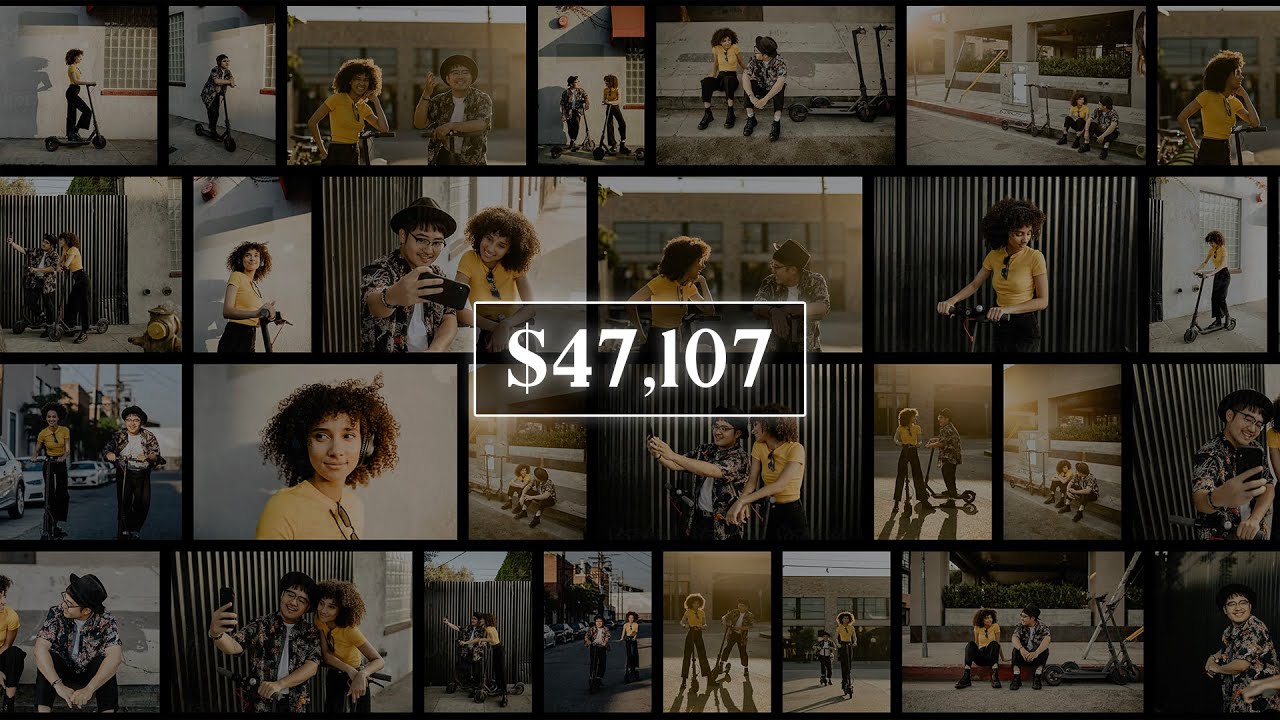
There is a folder on my hard drive called “Unused.” It has thousands of images in it. Portraits from test shoots, location scouting frames, behind-the-scenes documentation from commercial jobs. Some of those files are genuinely strong photographs. Most of them are doing absolutely nothing except aging quietly in the dark. I kept telling myself I’d get around to sorting them. I never did. Then I watched Mango Street’s breakdown of how they built a stock portfolio past $47,000 in total sales, and I finally had a reason to stop procrastinating.
Watch the full tutorial on YouTube
My work sits at the intersection of photography and digital painting. I composite for movie posters and album covers. The photos I take are almost always inputs, raw material for something else. But the images that don’t make it into a final composite, the outtakes, the alternate angles, the clean backgrounds I shot for reference, those are exactly the kind of photos that have commercial value on the right platform. Mango Street’s tutorial made that case clearly and with real numbers attached, which is the only kind of argument I find persuasive.
Step 1: Understand What You Actually Have Before You Shoot Anything New
 Overview of total stock sales dashboard on screen
Rachel and Dan from Mango Street opened with a results-first approach that I appreciated. Before prescribing any workflow, they showed the scorecard: over $47,000 in lifetime royalties from their Stocksy contributor profile, with more than 1,000 images uploaded over several years. The point was not to brag. The point was to establish that this is real money from photos that were, in many cases, already taken.
Overview of total stock sales dashboard on screen
Rachel and Dan from Mango Street opened with a results-first approach that I appreciated. Before prescribing any workflow, they showed the scorecard: over $47,000 in lifetime royalties from their Stocksy contributor profile, with more than 1,000 images uploaded over several years. The point was not to brag. The point was to establish that this is real money from photos that were, in many cases, already taken.
Before you book a single dedicated stock shoot, audit your existing archives. Look specifically for images that have clean compositions, good light, and a subject with broad commercial utility. People doing ordinary things. Animals. Food. Spaces. These are the categories that move on licensing platforms. If you are a working photographer, you almost certainly have some of this already.
Step 2: Identify Your Platform and Understand Its Licensing Model
 Stocksy contributor profile page showing uploaded photo count
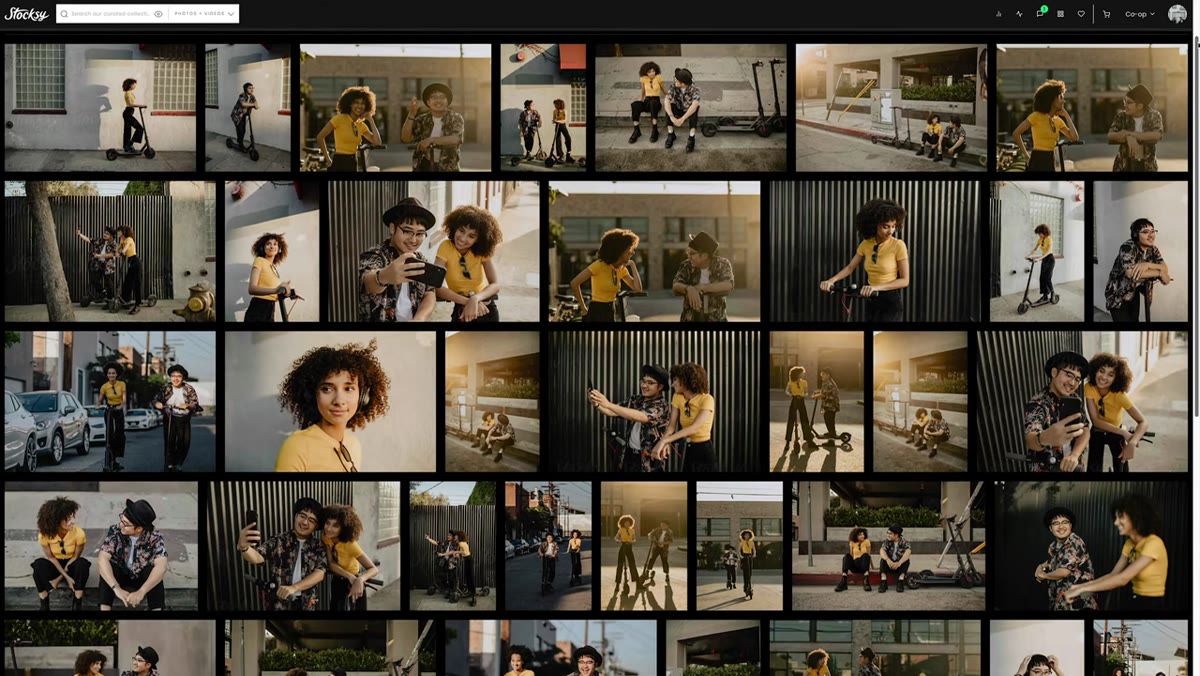
Mango Street contributes exclusively through Stocksy, which operates on a curated, royalty-focused model. This matters. Not all stock platforms pay the same percentage or attract the same buyers. Stocksy is known for higher royalty rates and a more selective submission process, which means the images that get accepted tend to command better prices per sale.
Stocksy contributor profile page showing uploaded photo count
Mango Street contributes exclusively through Stocksy, which operates on a curated, royalty-focused model. This matters. Not all stock platforms pay the same percentage or attract the same buyers. Stocksy is known for higher royalty rates and a more selective submission process, which means the images that get accepted tend to command better prices per sale.
Before uploading anything anywhere, understand the difference between standard and extended licenses on your chosen platform. One extended license sale on a single image can dwarf months of standard downloads. The tutorial makes this explicit: a single extended license purchase can dramatically change the math on any given image. That is important context when you are evaluating whether a photo is “worth” submitting.
Step 3: Prioritize Subjects with Broad, Evergreen Commercial Appeal
 Best-selling photos displayed including coffee shop and dog images
This is where the tutorial gets genuinely instructive. The top-earning images in their portfolio were not the most technically ambitious ones. They were a dog photographed in natural light, a woman in a coffee shop, and balloon letter props arranged into simple phrases. These images sold dozens of times each, with the dog photos alone generating close to $5,000 in royalties.
Best-selling photos displayed including coffee shop and dog images
This is where the tutorial gets genuinely instructive. The top-earning images in their portfolio were not the most technically ambitious ones. They were a dog photographed in natural light, a woman in a coffee shop, and balloon letter props arranged into simple phrases. These images sold dozens of times each, with the dog photos alone generating close to $5,000 in royalties.
The lesson is about matching your creative output to actual buyer demand. Designers, marketers, and content teams are looking for images that solve specific visual problems, and those problems are often mundane. A warm image of someone in a coffee shop works for a lifestyle brand, a blog post, a packaging concept, and a social campaign all at once. Specificity narrows your buyer pool. Warmth and relatable context widens it.
Step 4: Invest in a Prop or Concept That Can Generate Multiple Sellable Frames
 Balloon letter photos from 2016 shoot showing multiple variations
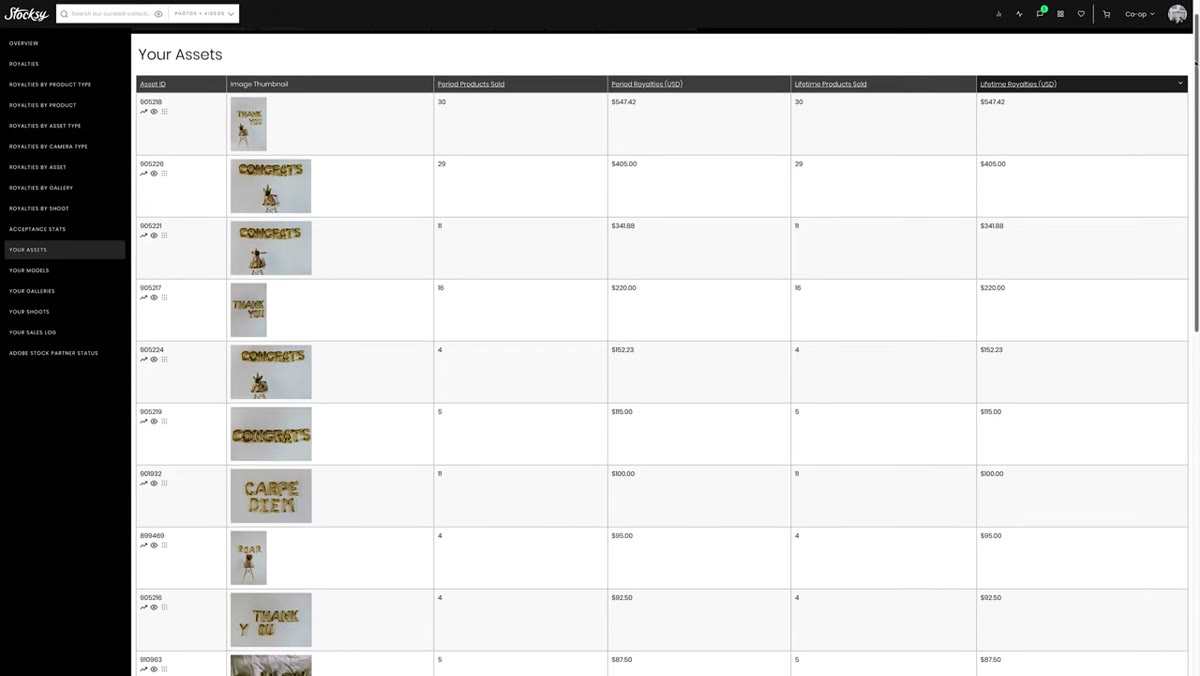
Rachel spent roughly $40 on balloon letters and built a concept around simple words and phrases. That one afternoon of shooting has generated over $4,000 in sales since 2016. This is the kind of thinking that makes a stock practice actually sustainable: one prop investment, one focused shoot, dozens of sellable images, years of passive returns.
Balloon letter photos from 2016 shoot showing multiple variations
Rachel spent roughly $40 on balloon letters and built a concept around simple words and phrases. That one afternoon of shooting has generated over $4,000 in sales since 2016. This is the kind of thinking that makes a stock practice actually sustainable: one prop investment, one focused shoot, dozens of sellable images, years of passive returns.
When you plan a stock shoot, think in terms of variety within a theme. Shoot the same subject from multiple angles. Vary the framing. Capture vertical and horizontal orientations because buyers need both for different layout contexts. If you are using a prop or a location, extract every reasonable composition you can before moving on. You are building inventory, not a single hero shot.
Step 5: Keep Your Technical Approach Simple and Light-Driven
 Behind-the-scenes setup showing available light and reflector use
Nearly all of the top-earning photos in their portfolio were shot with available light. Occasionally a reflector, rarely a flash. The Mango Street team is deliberate about this because complex lighting setups slow you down and the results are not necessarily better for stock purposes. Buyers want images that feel real and usable, not images that feel like an elaborate production.
Behind-the-scenes setup showing available light and reflector use
Nearly all of the top-earning photos in their portfolio were shot with available light. Occasionally a reflector, rarely a flash. The Mango Street team is deliberate about this because complex lighting setups slow you down and the results are not necessarily better for stock purposes. Buyers want images that feel real and usable, not images that feel like an elaborate production.
This runs counter to how I usually work. I am obsessive about controlling light for compositing, because every inconsistency becomes a problem later. But for straight photography intended for licensing, simpler is often more versatile. A softly lit image in a real environment reads as authentic. Authenticity sells.
Step 6: Use Real Locations and Get Your Releases in Order
 Coffee shop photo that became the top-selling single image
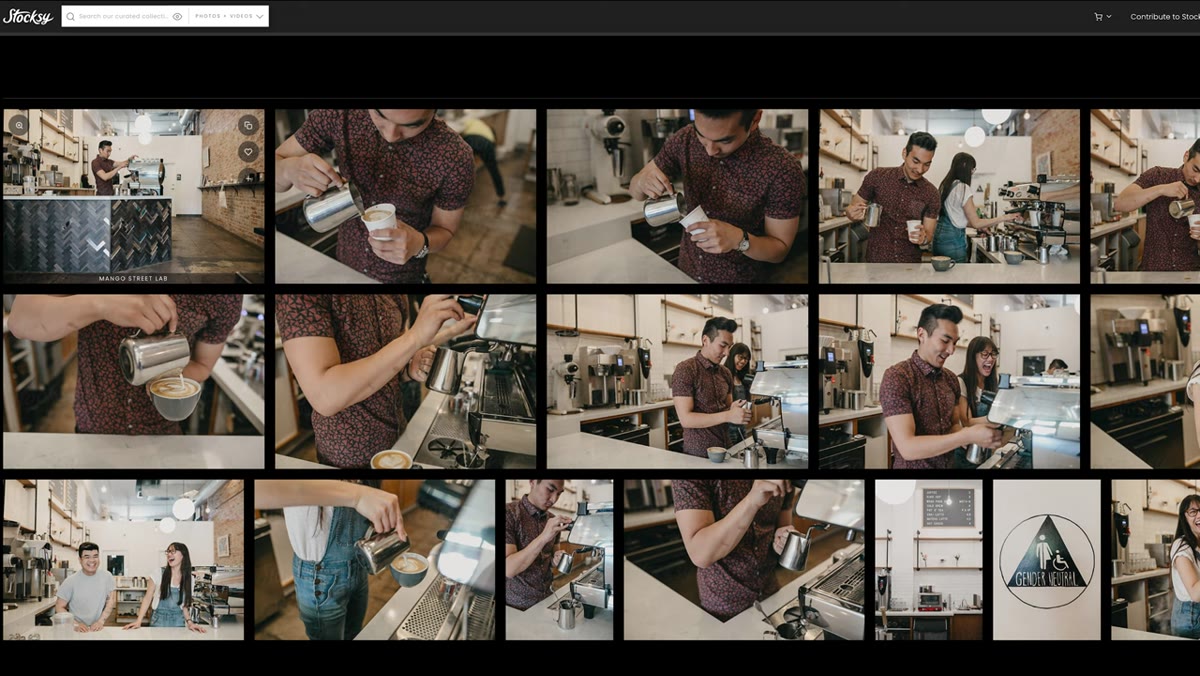
Their single best-selling image came from a coffee shop shoot Rachel did in exchange for model and property releases rather than a fee. The business got professional photography. She got the rights to license the images commercially. That trade made the whole thing possible because without signed releases, you cannot submit photos featuring identifiable people or private property to most stock platforms.
Coffee shop photo that became the top-selling single image
Their single best-selling image came from a coffee shop shoot Rachel did in exchange for model and property releases rather than a fee. The business got professional photography. She got the rights to license the images commercially. That trade made the whole thing possible because without signed releases, you cannot submit photos featuring identifiable people or private property to most stock platforms.
If you are approaching real locations for stock work, come with a clear value exchange. Offer to provide the business with edited images in return for signed releases. Most small businesses will agree because professional photography is expensive and they need it. Build this into your approach as standard practice.
What I Would Add From My Own Work
The Mango Street tutorial focuses on standalone photography, which is the right frame for stock. But for anyone whose practice involves compositing or reference shooting, there is an additional opportunity worth considering. Many of the raw elements I shoot for my own composites, isolated textures, sky replacements, clean background plates, have potential commercial value on their own terms. Selling them as stock not only earns passive income but funds future projects.
The caveat: if you shot something on a client job, even a personal or speculative project, check your agreements before uploading anything. The ownership question gets complicated fast when clients are involved. Keep a clear record of what you shot on your own time, on your own dime, with your own releases. That is your sellable inventory.
The single most important thing the Mango Street tutorial demonstrated is that consistency of output over time compounds into real money, even when individual sales are modest. A photo that earns $35 once and then earns it again six more times over five years has paid for itself many times over without any additional work from you. Most photographers already have the raw material. The gap is usually just the decision to do something with it.
Watch the full tutorial on YouTube and pay close attention to the specific photo examples they show. The images themselves are the lesson.
Comments (2)
Tried this technique this morning. Game changer for real.
Quality content like this is rare. Keep it up.
Leave a Comment